What Is Polyvinyl Alcohol (PVOH, PVA, poval)?
Polyvinyl alcohol (PVOH, PVA, poval) is a unique resin distinguished by its ability to dissolve in water, despite being a synthetic polymer. When dissolved in water, it forms a viscous aqueous solution, and once dried, it creates a solid film. These characteristics enable its use in a wide range of fields—from adhesives and binders to advanced functional materials.
This article provides an easy-to-understand overview of PVOH, including its applications, key properties, and points to consider when selecting the right grade.
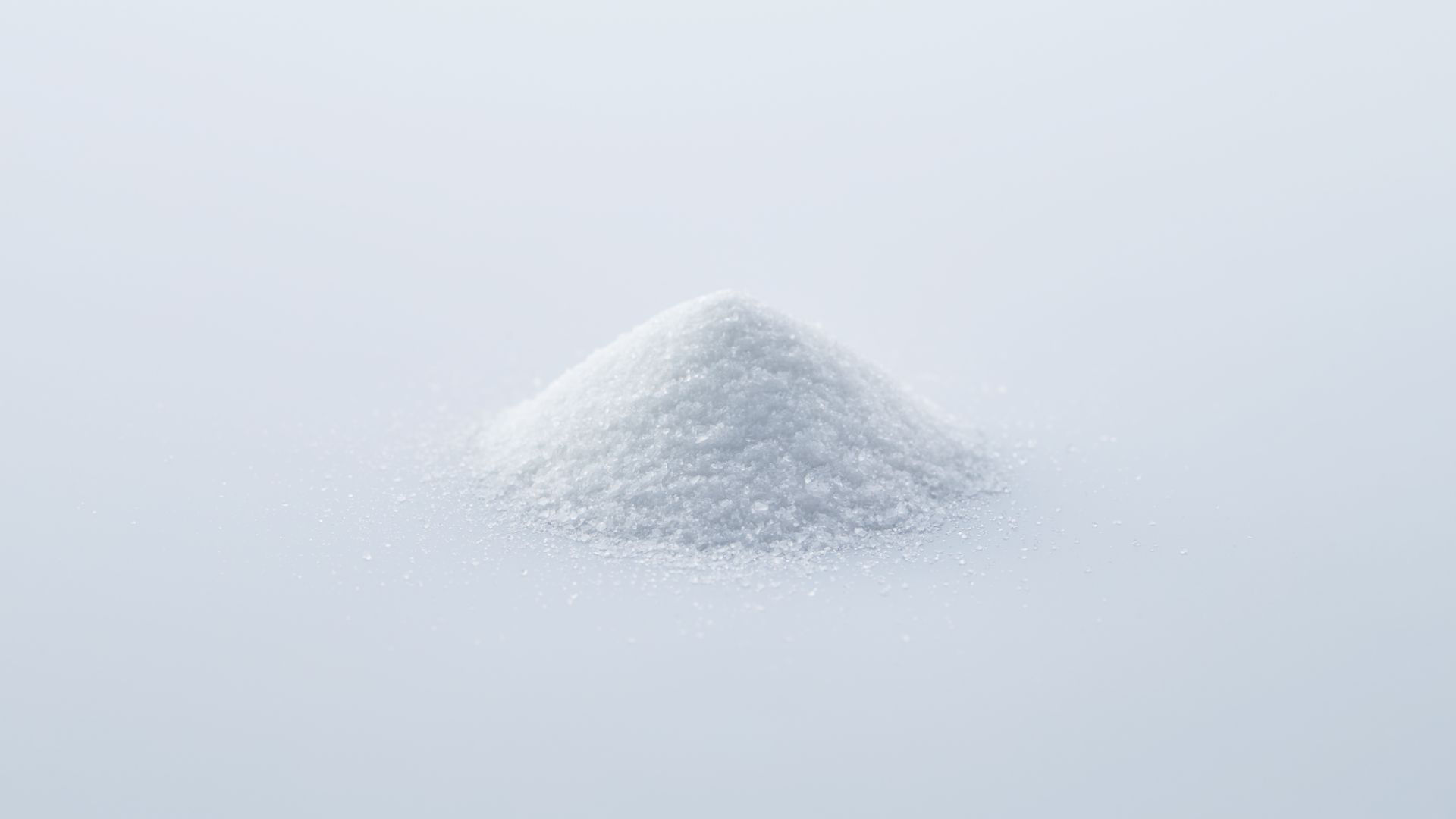
What Is Polyvinyl Alcohol (PVOH)? – Basic Positioning and Common Abbreviations
Polyvinyl alcohol is a type of synthetic polymer (synthetic resin) with the following molecular structure. Its hydroxyl groups (–OH) give it strong hydrophilicity, which is the source of its water solubility—a property that sets it apart from most other synthetic resins.
Because the formal ISO name “polyvinyl alcohol” is long, the abbreviations “PVOH”, “PVA”, and “poval” are commonly used in business and academic settings.
The preferred abbreviation varies by region:
• In Europe and North America, "PVOH" is the most widely recognized term.
• In Asia, both "PVA" and "PVOH" are seen.
• In Japan, "PVA" and "poval" are commonly used.
In this article, we will use the internationally recognized term “PVOH” for our explanations.
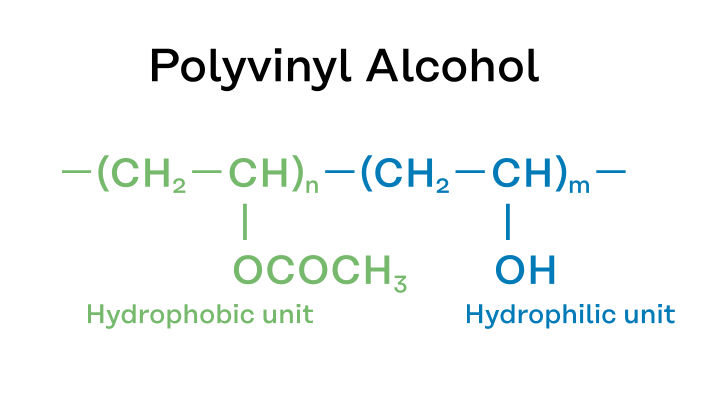
Molecular structure of polyvinyl alcohol
Key Characteristics of PVOH – Water-Soluble, Viscous, and Film-Forming
PVOH exhibits characteristic behavior both when dissolved in water and after drying.
Water Solubility
PVOH is generally used by dissolving it in water. Solubility varies by grade and processing conditions. Most grades require heating water to around 90°C for dissolution, while cold‑water‑soluble grades exist as specialized products.
Importantly, “water-soluble” does not mean “weak to water.” Depending on the application, PVOH can be engineered with a wide range of solubility and water‑resistance levels.
Key evaluation points:
• Ease of dissolution (temperature, time)
• Viscosity and stability of the aqueous solution
• Required water resistance based on application
Adhesion and Film Formation
When dissolved, PVOH forms a sticky, viscous solution. Upon drying, it produces a strong film that provides adhesive strength and film‑forming capability.
Key evaluation points:
• Film strength
• Viscosity
• Physical properties after drying (water solubility, water resistance, etc.)
Grease/Solvent Resistance and Gas Barrier Performance
Thanks to its hydroxyl groups (–OH), PVOH can also contribute to gas barrier properties and resistance to grease and solvents, depending on the application.
Key evaluation points:
• Barrier performance
• Water resistance
• Processability
Surface Activity and Dispersibility
With both hydrophilic and hydrophobic characteristics, PVOH provides dispersion stability and protective colloid effects. It is often used to improve compatibility with powders or other ingredients in formulations.
Key evaluation points:
• Dispersion stability
• Viscosity stability over time
• Foaming characteristics
• Appearance
• Surface tension
Summary
PVOH is a material whose water solubility enables multiple functional roles: binder (adhesion & film formation), dispersant, and barrier material. The most important performance varies by application, which guides grade selection and evaluation criteria.
Applications of PVOH – From Everyday Products to Advanced Technologies
Leveraging these properties, PVOH is used in a wide variety of industries. Below are representative examples with application objectives.
Adhesives and Binder Applications
PVOH is widely used in common household and industrial adhesives—such as liquid glue, laundry starch, postage stamp adhesive, and even children’s craft slime. Its safety, water solubility, and ease of handling make it suitable for a broad range of adhesives and binder applications.
Key evaluation points:
• Binding strength (adhesion and film formation)
• Ease of handling

Processing Applications (Films, Sponges, Modified Resins)
PVOH solutions can be processed into PVOH films, used in applications such as LCD polarizers and unit‑dose detergent packaging. PVOH can also be processed into PVOH sponges, commonly used for semiconductor cleaning and wiping.
Additionally, PVOH can be chemically modified to produce PVB (polyvinyl butyral) resin. PVB resin is widely used as a binder for MLCCs (Multilayer Ceramic Capacitors), in paints, and as an interlayer film for laminated automotive and architectural safety glass.
Key evaluation points:
• Water solubility
• Film‑forming capability
• Processability

Additive Applications (Used as Part of a Formulation)
PVOH solutions are also used as additives. Examples include:
• Polymerization stabilizers in woodworking adhesives
• Polymerization suspending agents for PVC resin manufacture
• Gas barrier materials for food packaging
• Textile sizing agents
• Thermal and release paper
• Seed‑coating binders to improve germination
• Water‑soluble support materials for 3D printing
• Photoresists for semiconductors
• Granulation binders for electronic components
Key evaluation points:
• Dispersibility (protective colloid behavior)
• Effectiveness at low dosage
• Barrier performance
Summary
PVOH applications can be broadly categorized into: binder, dispersant, and barrier. Clarifying which function is expected helps streamline grade selection and evaluation.
Kuraray as a Global PVOH Manufacturer – Our Strengths
Several companies manufacture and supply PVOH worldwide, and performance requirements vary by application and region.
Kuraray has been engaged in the PVOH business for many years. Leveraging our integrated expertise—spanning vinyl acetate monomer, PVOH polymers, and downstream applications—we design and supply high‑quality PVOH products that take into account the specific requirements of each application and its operating environment.
We operate a global four‑region production network (Japan, Germany, Singapore, United States), enabling stable and consistent supply—an essential factor for industrial applications that require long‑term continuity.
Kuraray’s PVOH brand is KURARAY POVAL™, available in a wide range of grades optimized for various applications and performance requirements.
Please refer to a separate page for detailed information on the product lineup of KURARAY POVAL™, selection criteria by application, and the characteristics of each grade.